
From America to Hungary: What American Athletes Should Know About Hungarian Football and Life
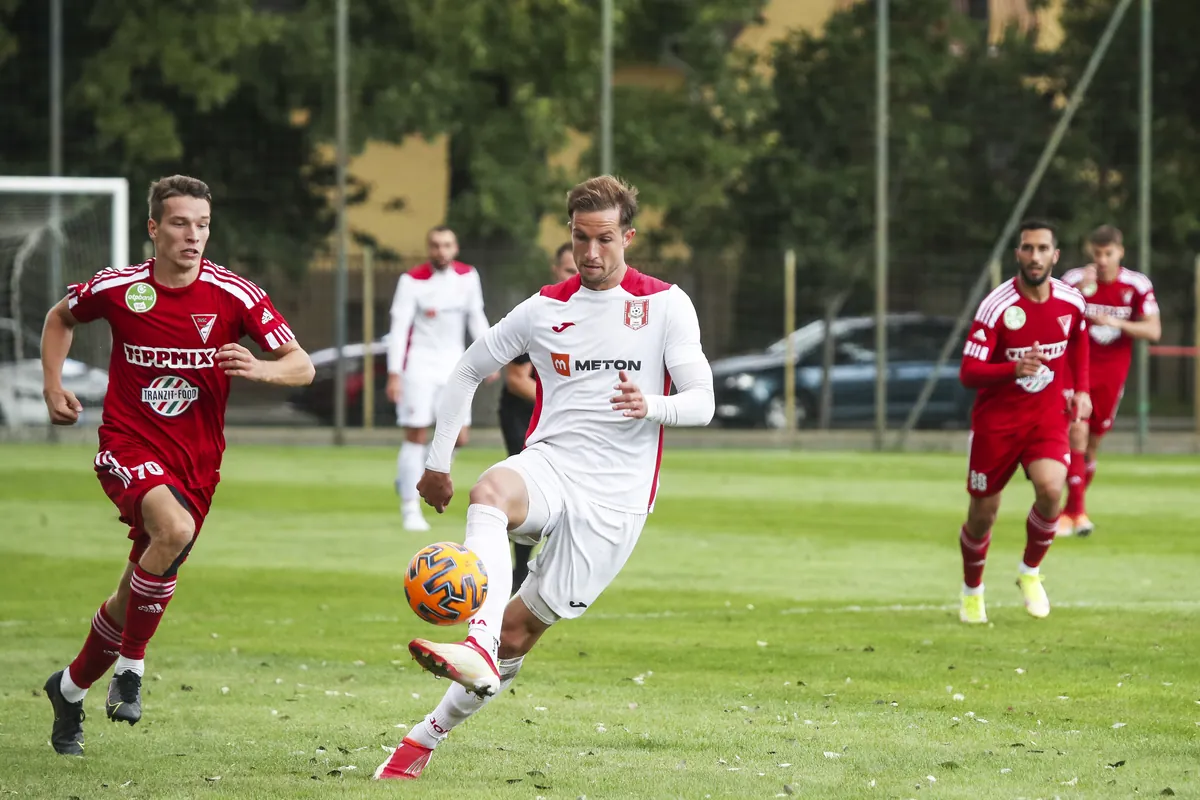
For an American athlete, moving to Hungary can be an exciting opportunity.
You get to experience Europe, play football in a new environment, meet people from a different culture, and see a side of the game that may be very different from what you have experienced in the United States.
But there is one thing worth understanding before you arrive:
The football culture is different. The relationship between players and coaches can be different. Daily life can feel different. Even the way people communicate can take some getting used to.
None of these differences are necessarily good or bad.
They're simply part of what makes the experience different — and understanding them before you arrive can make the transition much easier.
Football means something different in Hungary
For many Americans, especially those coming through the college system, football — or soccer — has been part of a highly organized environment.
You may have spent years playing club soccer, then entered college where football, academics, facilities, sports science and university life became closely connected.
In Hungary, football traditionally revolves around clubs rather than universities.
A player may develop through an academy, move into a senior team, play in different levels of the Hungarian league system, and build a career without football ever being connected to their education.
That creates a different football mentality.
In Hungary, the club is often the center of the player's football life.
And football has deep cultural roots.
Hungary has a long football history, including the legendary national team of the 1950s and players such as Ferenc Puskás. The country's football identity is therefore connected not only to modern professional football but also to a much longer sporting tradition.
For a Hungarian player, football may not simply be something they do.
It can be part of who they are.
The club system can be more important than the university
This is one of the first things an American athlete should understand.
In the United States, a talented young player might think about:
Which university can I attend?
In Hungary, a player is more likely to think about:
Which club can I play for?
The Hungarian football pyramid contains multiple levels of competition, from the professional top division down through the lower national and regional leagues.
That means there are opportunities beyond the biggest clubs.
A player arriving from America shouldn't assume that only the top division matters.
A lower-level senior club can still provide something extremely valuable: real European senior football experience.
For a young American player, training and competing with adult players can be a major change from the college environment.
The tempo, physicality, tactical expectations and responsibility can all be different.
And sometimes the biggest lesson is simple:
Your previous college career can open a door.
Coaching can feel more direct
American athletes may also notice a difference in coaching style.
Hungarian coaches can be very direct.
If something is wrong, you may hear about it immediately.
If you lose concentration, the coach may tell you.
If your tactical positioning isn't correct, you may be corrected in front of the group.
For an American athlete who is accustomed to a more conversational coaching environment, this can initially feel uncomfortable.
It is important not to automatically interpret direct criticism as personal criticism.
In many football environments, the coach is focused on the performance of the player and the team.
At the same time, every coach is different.
Hungary has coaches who communicate in many different ways, and American athletes shouldn't arrive expecting one universal Hungarian coaching style.
The important thing is to learn how your particular coach communicates.
You may have to earn trust before receiving opportunities
Another difference can be the relationship between reputation and opportunity.
In some American environments, a player can have a clearly defined role within a program.
In club football, things can sometimes feel less predictable.
A coach may want to see what you can do before giving you significant responsibility.
That means your first few weeks matter.
How do you train?
How do you react when you don't play?
How do you respond to criticism?
Are you reliable?
Do you work for the team?
Do you show up on time?
Do you adapt?
These things can influence how teammates and coaches see you.
Talent gets noticed.
Character gets remembered.
Don't expect everyone to speak perfect English
Hungary is a European country where English is widely taught, particularly among younger generations, but you should not assume that everyone you meet will be comfortable speaking English.
At a football club, you may encounter teammates who speak excellent English.
You may also meet people who speak very little.
And this is where making an effort can go a long way.
Learn a few Hungarian words.
Say hello.
Say thank you.
Learn how to order food.
Learn the names of common football instructions.
Even if your pronunciation isn't perfect, people generally appreciate the effort.
You don't need to become fluent immediately.
But showing that you're willing to enter Hungarian culture rather than expecting Hungary to operate entirely in English can make your experience much easier.
Hungarian communication can be more reserved
This is one of the biggest cultural differences an American might notice.
Americans are often comfortable making small talk.
You might speak to someone you've just met and quickly ask:
"How are you?"
"Where are you from?"
"What do you do?"
Hungarians can sometimes be more reserved with strangers.
That doesn't necessarily mean someone is unfriendly.
It may simply take longer to build a relationship.
Once you become friends with Hungarians, however, relationships can become very genuine and personal.
So if someone doesn't immediately respond with the same enthusiasm you're accustomed to in the United States, don't automatically assume they don't like you.
Give it time.
Life can feel less rushed
Another difference many Americans notice is the pace of everyday life.
Hungarian cities can feel smaller and more compact than many major American cities.
Budapest has a population of around two million in its metropolitan environment, but even Budapest can feel very different from cities such as New York, Los Angeles or Chicago.
Public transportation is widely used.
Cafés and restaurants can be important social spaces.
Walking is common.
And many everyday destinations may be much closer together than an American athlete expects.
You may also notice that Hungarian life can feel less centered around large-scale commercial spaces.
Instead of driving everywhere and spending time in enormous shopping centers, people may walk, use public transportation, visit smaller local businesses, or spend time in cafés and restaurants.
Food is going to be different
Let's talk about the important stuff.
Hungarian food.
If you come to Hungary expecting American-style food everywhere, you're going to be surprised.
Hungarian cuisine is known for dishes such as goulash, paprikash, stews, soups, potatoes, noodles and a wide variety of pastries.
Paprika is everywhere.
And yes — Hungarians take their paprika seriously.
You will probably also notice that portion sizes, meal schedules and restaurant culture can differ from what you're used to.
The good news?
You have an entire country to explore through food.
And Budapest has an increasingly international food scene, so you won't have to give up everything you're familiar with.
The cost of everyday life can be different
One of the major practical advantages for an American athlete is that everyday expenses in Hungary can be different from those in many major U.S. cities.
But don't assume that everything is automatically cheap.
Housing, restaurants, transportation and entertainment vary significantly depending on where you live and how you live.
Budapest is also very different from smaller Hungarian cities.
Football is closer to the community
One of the most interesting differences can be the relationship between football clubs and their local communities.
Hungarian football has traditionally been strongly connected to individual towns and neighborhoods.
A club can represent much more than the players currently on its roster.
It can represent the local community.
That can be especially interesting for an American athlete.
You aren't simply joining a team.
You're entering a local football environment.
People may know the club.
They may know the history.
They may know the rivalries.
And they may have opinions about how the team is performing.
You become part of that environment.
The football calendar can feel different
An American college athlete may be accustomed to a highly structured academic and athletic calendar.
Hungarian club football operates according to a different rhythm.
The season, preseason, winter break, training schedule and competition structure are different from NCAA soccer.
The importance of preseason can also be significant.
For an international player, this means that timing matters.
Arriving at the right point in the season can affect how quickly you integrate into the team.
That's one reason understanding the local football calendar before making a move is important.
You are going to be the foreign player
This sounds obvious.
But it is worth thinking about.
In America, you may have been the player who knew how everything worked.
You understood the language.
You understood the university.
You knew how the team operated.
You knew what to expect.
In Hungary, suddenly you're the one who doesn't know.
You may not understand the joke in the locker room.
You may not know why training starts at a particular time.
You may not understand something the coach says.
You may not know how public transportation works.
You may not know which paperwork you need.
That's normal.
Being uncomfortable is part of international experience.
The key is not to hide the fact that you don't understand something.
Ask.
Don't try to recreate America in Hungary
This may be the most important piece of advice.
If you move to Hungary, don't spend your entire time looking for America.
Don't compare every restaurant.
Don't compare every training session.
Don't complain that people don't communicate exactly the same way.
Don't expect everyone to adapt to you.
Instead, experience the country.
Learn how Hungarian football works.
Try Hungarian food.
Learn some Hungarian.
Travel.
Talk to your teammates.
Visit other cities.
Experience Budapest.
Watch local football.
Ask questions.
The reason you moved across the Atlantic was to experience something different.
Let it be different.
What you can bring from America
And the cultural exchange works both ways.
American athletes bring their own strengths.
Many arrive with experience from highly organized college environments.
They may bring strong communication skills, confidence, athletic preparation, academic discipline and experience balancing sport with education.
Hungarian football can offer something different in return:
A European club environment.
Senior football.
A different tactical culture.
A different football history.
A different approach to everyday life.
And an opportunity to experience Europe from the inside rather than simply visiting it for a week.
That's where the real value can be.
Hungary isn't just a destination
For an American athlete, Hungary can initially look like a place on a map.
Central Europe.
Budapest.
Football.
Europe.
But after a few months, it can become much more than that.
You start recognizing your teammates' personalities.
You learn the bus routes.
You have a favorite restaurant.
You know where to get coffee.
You understand what your coach expects.
You start recognizing Hungarian football terminology.
And eventually, something changes.
You stop feeling like a visitor.
You start feeling like part of the environment.
That's what cultural integration is really about.
Not becoming Hungarian.
Not forgetting where you came from.
But becoming comfortable enough in a new culture that you can learn from it.
The Second Assist perspective
At Second Assist Agency, we believe that international football opportunities should be about more than finding a club.
An American athlete coming to Hungary needs to understand the environment they're entering.
The football.
The culture.
The people.
The expectations.
The everyday realities.
Because the biggest challenge of moving abroad isn't necessarily stepping onto a new football pitch.
It's learning how to function successfully when almost everything around that pitch is unfamiliar.
You don't come to Hungary simply to play European football.
You come to experience a different football culture, a different way of life, and a different perspective on your own career.
And sometimes, the biggest development happens away from the field.
Find out what’s realistic for you
Tell us about your background and goals. We’ll come back to you within 48 hours with an honest assessment and a free consultation call.
Start your application