
What It’s Really Like to Play Soccer in Hungary: My Experience in the Hungarian Lower Leagues
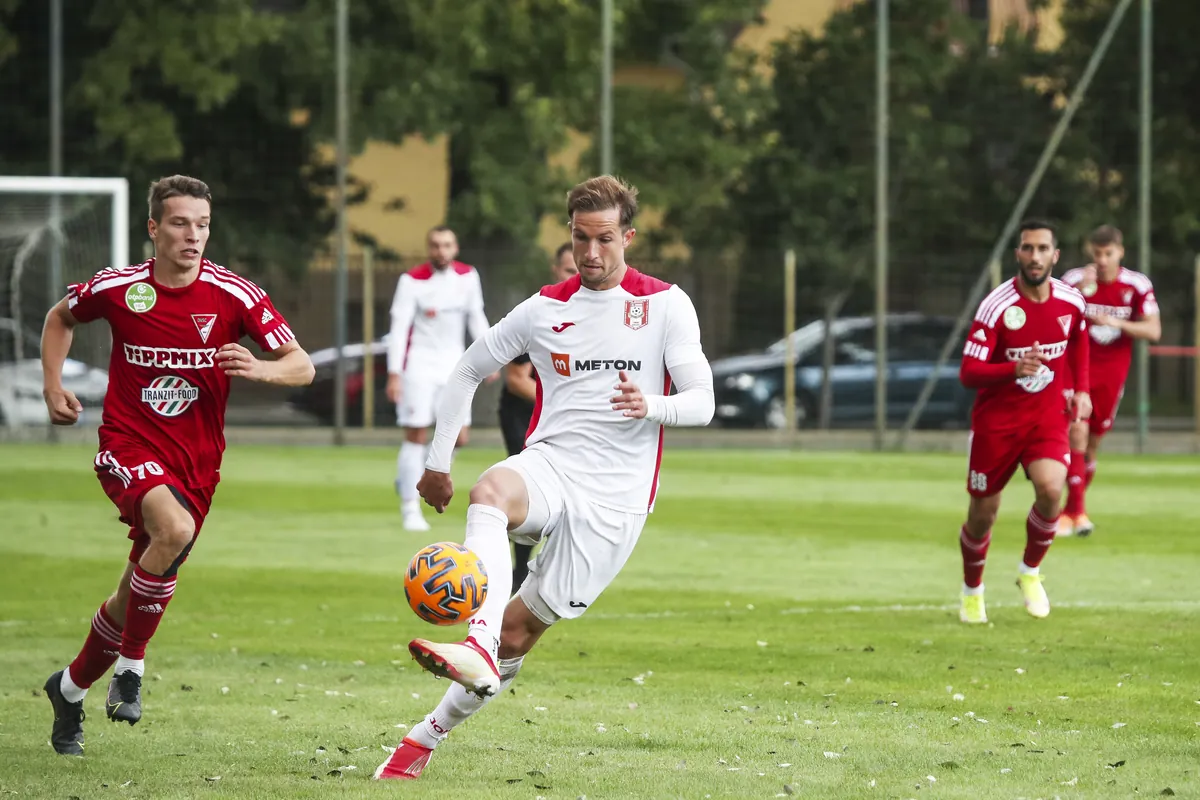
Hungarian soccer carries a history that is far bigger than the size of the country might suggest. Two World Cup silver medals, the legendary Golden Team and Ferenc Puskás have made Hungary one of the most historically significant soccer nations in Europe. The Hungarian soccer tradition is often associated with the Danube School — a soccer culture built around technical ability, intelligent movement, passing and creativity that influenced the development of the modern game far beyond Hungary’s borders.
That history is still part of the identity of Hungarian soccer today. And while the country is not one of Europe’s traditional financial powerhouses, the soccer environment has changed significantly over the past decade.
The national team has returned to the European Championship three times since 2016 — at EURO 2016, EURO 2020 and EURO 2024 — marking a sustained return to the international stage. At the same time, Hungary has experienced major investment in soccer infrastructure. Modern academies, training centres and stadiums have been built across the country. The Puskás Aréna in Budapest, named after Hungary’s most famous player, hosted the 2026 UEFA Champions League final between Paris Saint-Germain and Arsenal.
My Experience in Hungarian Soccer
I am currently playing in the Hungarian third division, and this season is my seventh season at this level. During those seven seasons, I have played for several clubs in Budapest and the surrounding region.
That experience has given me a perspective that is difficult to get from statistics or league tables alone.
Hungarian is structured differently from the American college system. The soccer season is essentially a year-round commitment. There is a summer preparation period, a competitive autumn season, a winter break, another preparation period and then the spring half of the season. There are relegations and promotions between the leagues, which make them very competitve. For a player coming from the United States, the rhythm can take some getting used to. Are you ready for it?
Even in the third and fourth divisions, football is taken seriously.
You can play on weekends in front of several hundred spectators, and attendances of around 500–1,000 are possible depending on the club, opponent and location. You travel around the country for away matches, experience different soccer cultures within Hungary and compete in a system where every result matters.
And there is a financial side that many American players do not expect.
Competitive compensation is possible even outside the professional top divisions. Even in the fourth tier, players can receive meaningful payments and performance bonuses. The exact amount varies enormously from club to club, but the important point is that soccer at these levels is not necessarily purely recreational.
The Level: How Does It Compare to NCAA Soccer?
For an American college player, one of the most interesting questions is: How good is „the game” in Hungary?
In my experience, the level in the Hungarian third and fourth divisions can be comparable to what you encounter in NCAA Division I soccer. Of course, there is enormous variation between individual teams and players, so there is no simple one-to-one comparison.
The biggest difference is the way the game is played.
Hungarian soccer tends to place a greater emphasis on tactical understanding, technical ability, positioning and decision-making. Players are expected to understand the game rather than simply rely on athleticism. The tempo can be different from American college soccer, and the tactical demands become particularly noticeable when playing against experienced teams. In general, coaches here like to follow periodizations and feel the importance of team tactics as well as position specific rules. They prefer to use exercises which combine technical skills with tactical understanding and physical attributes.
For an NCAA player, that can be an advantage. The physical qualities developed in the American college environment — athleticism, speed, strength and intensity — can translate very well. Combine those qualities with strong technical and tactical ability, and there is a genuine opportunity to adapt quickly.
Training Like a Serious Footballer
One misconception about lower-division European football is that players simply train a couple of times a week and play on Sunday.
That is not necessarily the reality.
At many competitive clubs, you can expect four or five training sessions per week, plus a weekend match. The exact schedule depends on the club, the league and whether players have jobs or other commitments.
This is one reason Hungary can be an attractive destination for American college graduates. You can continue training and competing at a serious level without necessarily having to commit to the financial and lifestyle demands associated with living in Western Europe's major soccer markets.
There is also a pathway upward.
Scouts and coaches from higher-level clubs do watch lower-division matches. A strong season can lead to opportunities at a higher level. You do not necessarily need to start at the highest possible level. Sometimes the best career move is to find a club where you will actually play, perform consistently and create your next opportunity.
What an American College Player Should Know
If you are coming from NCAA soccer, the biggest adjustment may not be the soccer itself.
It is the independence.
In college, almost everything is organised around you. You have coaches, athletic trainers, academic support, facilities, teammates and a structured daily schedule.
In Hungary, you are responsible for much more.
You need to find accommodation, manage transportation, understand your contract, handle your finances, arrange insurance and adapt to a different soccer culture. If you are coming from outside the European Union, immigration and residence permissions also need to be addressed before you arrive.
Language can be another adjustment. English is common among younger people especially in Budapest which is an international capital. Within international environments, but Hungarian is very different from English and many everyday situations will still require patience and flexibility.
The reward is that you become much more independent — while continuing to play the game you love.
A Realistic European Opportunity
Hungary should not be presented as a shortcut to professional soccer. Not every NCAA player will arrive and immediately earn a professional contract. The standard varies, and honest evaluation matters.
But that is precisely why the Hungarian lower divisions can be interesting.
You can play competitive soccer throughout the year, train four or five times a week, travel around the country, play in front of real supporters, earn compensation in some cases and potentially attract attention from higher-level clubs.
For an American college player whose NCAA eligibility is coming to an end, that can be a meaningful next chapter.
My own seven seasons in the Hungarian third division have shown me that soccer careers do not always follow the obvious path. Sometimes the opportunity is not waiting in the biggest stadium. Sometimes it is on a Saturday afternoon, a few hundred people watching, somewhere in Hungary — and that can be enough to start the next chapter.
Find out what's realistic for you
Tell us about your background and goals. We'll come back to you within 48 hours with an honest assessment and a free consultation call.
Start your application